Across Africa, National Agroecology Strategies (NASs) are gaining momentum as frameworks for transforming food systems. As countries move from strategy development to implementation, the challenge is to translate policy ambitions into concrete action.
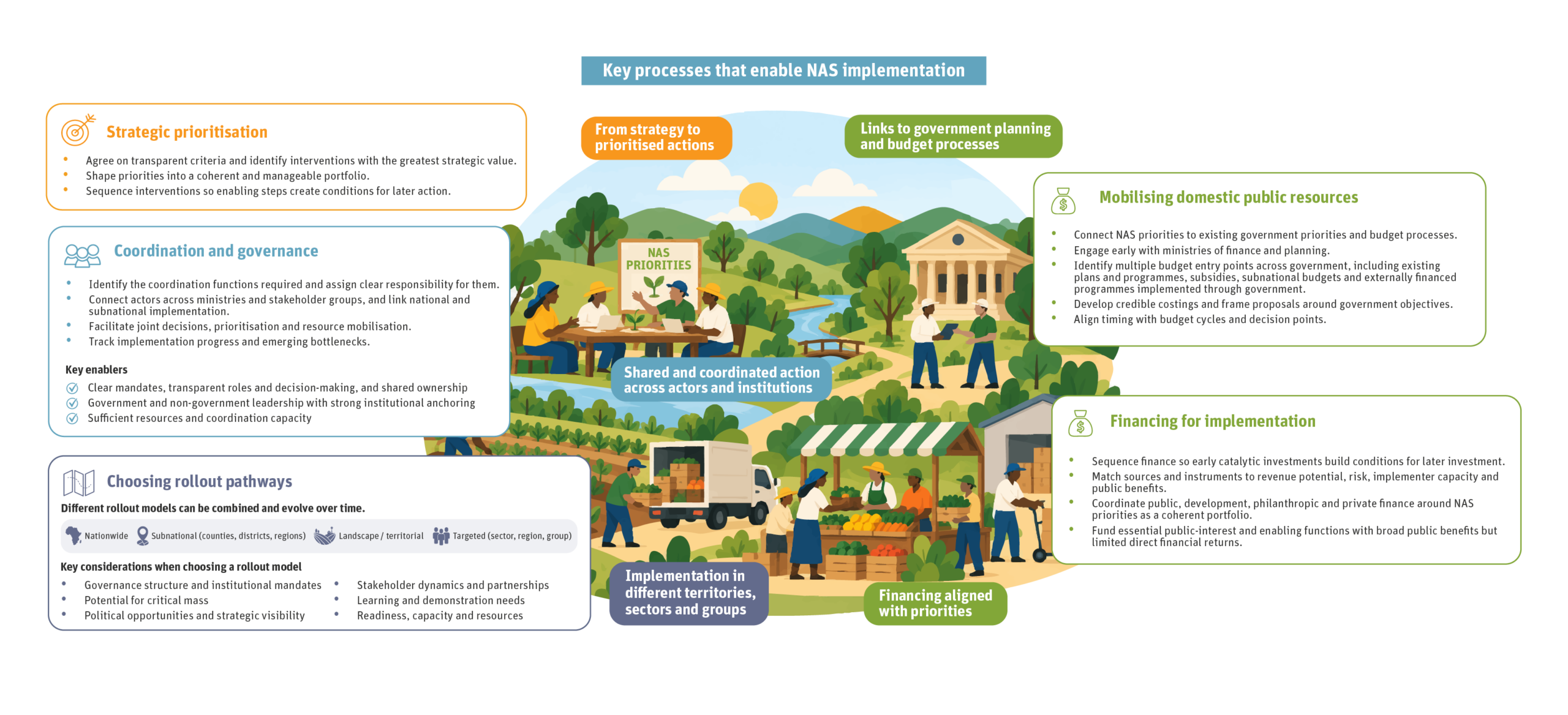
Drawing on experiences and lessons from frontline actors in Africa, particularly Kenya and Tanzania, this report explores four key dimensions of successful NAS implementation:
- Strategic prioritisation;
- Context-specific rollout pathways;
- Effective coordination and governance;
- Financing.
Building on a previous publication on NAS, this report offers practical insights and recommendations for policymakers and other stakeholders seeking to turn National Agroecology Strategies into sustained action and impact.

National Agroecology Strategies (NASs) have the potential to harness opportunities of a sustainable development of agri-food systems, by upscaling agroecological production practices, developing markets, value chains and consumer demand that can accelerate transition.

As part of its work on NAS, Biovision coordinates a Community of Practice with government representatives and civil society actors working on mainstreaming agroecological policies, such as these strategies. Learn more about NAS developments and perspectives from country representatives.
"NASs are comprehensive, rooted in agroecological foundations, and respond to multiple societal needs."
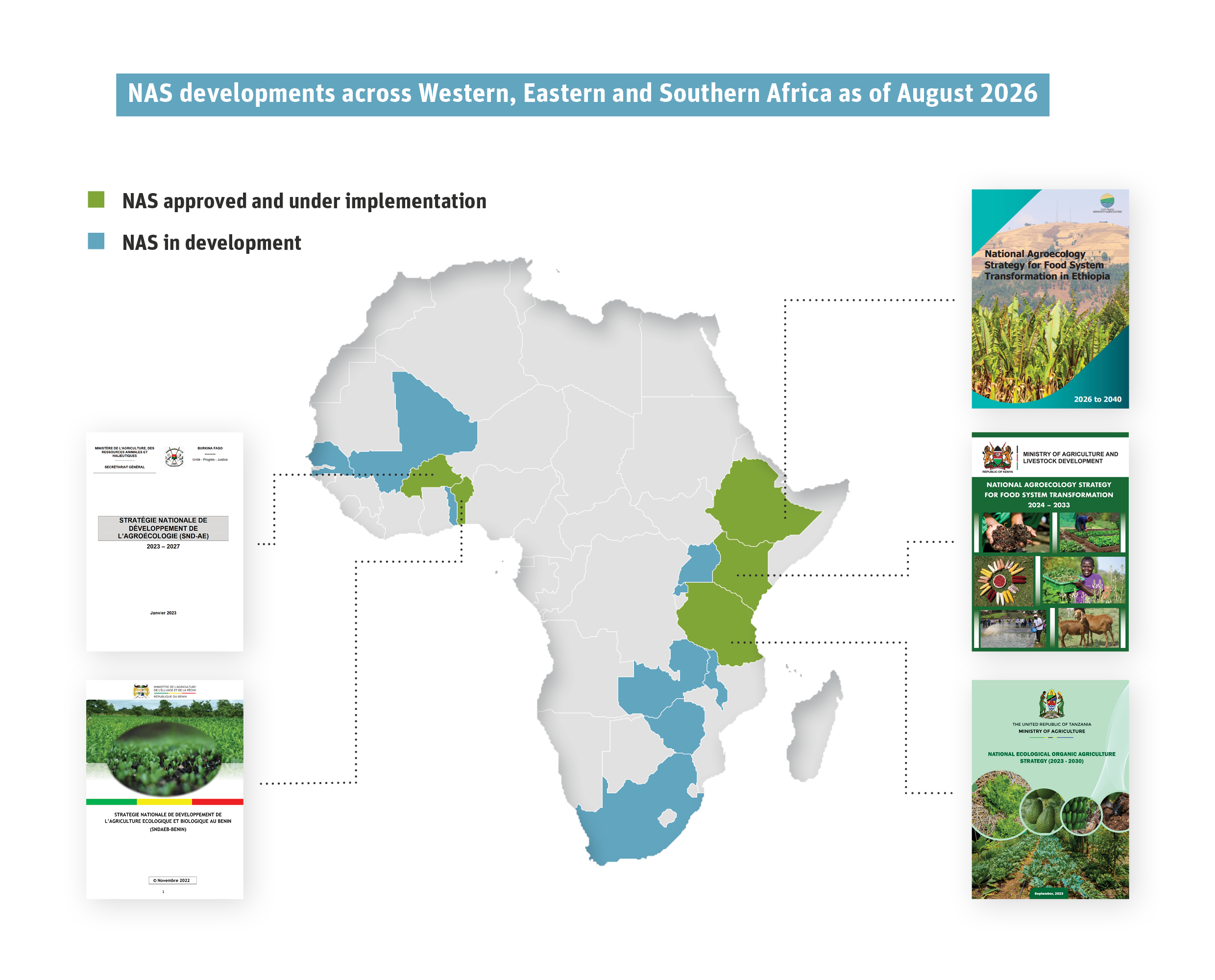
In recent years, a new wave of NAS development has emerged across continents. In Africa, multiple countries have developed or are developing NASs as a framework for transforming food systems through agroecology, including Tanzania and Kenya who launched their strategies in 2023 and 2024, and have since moved into early stages of implementation.
- Repository on NAS and Agroecology Laws/Policies globally by the Agroecology Coalition.
- Key messages on mobilisation of public domestic resources for NAS – expert workshop consultation (July 2025)
National Agroecology Strategies in Eastern and Southern Africa
- Launch: November 2023.
- Latest developments: In 2025, national and local actors from the NEOAS Implementation Task Force, hosted by Tanzania Organic Agriculture Movement (TOAM), identified four strategic intervention areas from the NEOAS objective and priorities to catalyze agroecological transition in Tanzania. These areas became the basis to determine immediately investable opportunities in the three prioritized landscapes (Lake Zone, Central Region and Northern Region).
- Important documents:
- NEOAS
- Summary slides
- NEOAS investment opportunities (left boxes under blue frames)
- Launch: November 2024.
- Latest developments: In 2025, the steering body of the NAS-FST implementation, the National Technical Committee, identified and validated initial priorities (landscapes
and strategic areas), that can catalyze the vision of an agroecological transition in the country. Four strategic areas for investment were identified and seven counties prioritized: Murang’a, Vihiga, Kilifi, Marsabit, Nakuru, West Pokot and Makueni. - Important documents:
- NAS-FST
- Summary slides
- NAS-FST investment priorities (left boxes under blue frames)
- Launch: March 2026.
- Important documents:
- Actors in Malawi conducted an analysis of a set of national environmental and agrarian policies to assess their alignment with agroecology.
- This analysis concludes with a recommendation to develop a National Agroecology Strategy to streamline government efforts and ensure policy coherence. Read it here