Bioinputs such as biofertilizers, biostimulants and biopesticides can strengthen soil health and reduce dependence on synthetic chemicals, and the rapidly growing bioinput market offers significant opportunities. Increasing environmental awareness, regulatory pressure on chemical inputs and rising demand for safer food systems have accelerated innovation and investment, particularly in the Global South.
However, this expansion also carries considerable risks. Without strong oversight and alignment with agroecological principles, the bioinput sector may reproduce structural and ecological problems long seen in the synthetic pesticide industry—such as corporate concentration, farmer dependency, product uniformity and poor adaptation to local conditions. Biopesticides in particular deliver real benefits only when embedded in integrated pest-management and agroecological systems, supported by clear regulation, quality control and collaboration with farmers, SMEs and researchers.
Bioinputs can indeed contribute to biodiversity, soil regeneration and climate goals, but only when used as part of holistic agroecological strategies rather than as simple “green” replacements. Ensuring ecological integrity, farmer autonomy and long-term sustainability must therefore remain central as the sector evolves.
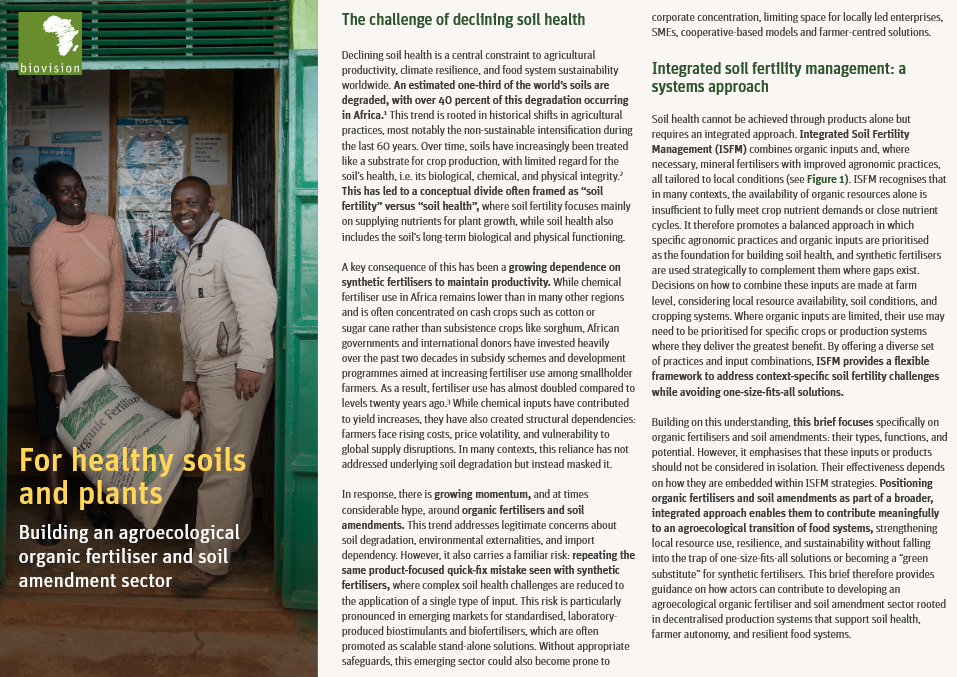
Policy brief „For healthy soils and plants: Building an agroecological organic fertiliser and soil amendment sector“
This policy brief highlights how organic fertilisers and soil amendments can help restore soil health, strengthen local economies and build more resilient food systems. It stresses that to achieve these objectives, these products need to be developed as part of broader agroecological strategies, not as stand-alone inputs or simple “green substitutes” for synthetic fertilisers. It also provides guidance on how actors can contribute to developing an agroecological organic fertiliser and soil amendment sector rooted in decentralised production systems that support soil health, farmer autonomy, and resilient food systems.
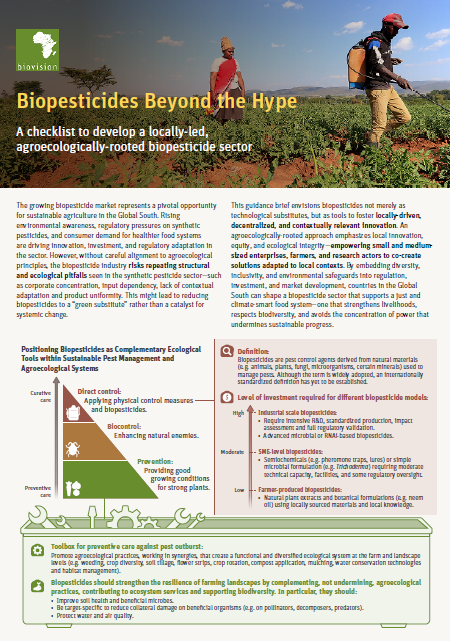
Policy brief „Biopesticides beyond the Hype: A checklist to develop a locally–led, agroecologically-rooted biopesticide sector“
This practical policy brief offers a checklist for developing a decentralized, nationally driven biopesticides sector that supports crop diversity and empowers farmers, SMEs and local innovators. It helps practitioners and policymakers assess biopesticides for safety, sustainability and responsible use within agroecological systems.
Creating an Enabling Business Environment for Organic Inputs in Kenya
This policy brief outlines the key elements needed to scale bioinputs sustainably, including regulation, quality control, research, extension and incentives. It shows how policy choices shape whether bioinputs strengthen agroecological transitions or remain limited in impact.

Organic Fertilizers & Biofertilizers in Kenya
Based on Kenyan experience, this brief examines how organic and biological fertilizers perform in real farming systems. It highlights adoption challenges, market and regulatory factors, and soil health impacts—offering insights relevant for countries seeking to scale biofertilizers sustainably.

Agroecology as a response to agri-input scarcity
This policy brief presents key recommendations of a dialogue organised by Biovision and the FAO that explored the role of agroecology in increasing resilience to agri-input scarcity in the context of increase in fertilizer prices at the end of 2021 and in 2022.
Building on previous work, and to reflect on what a truly agroecological biopesticide sector means, Biovision also organised an event at the Basel-Rotterdam-Stockholm Conventions COPs (on chemical regulation) in Geneva in May 2025, got some media coverage and engaged experts in the network of Biovision on the topic. All learnings from these engagements went into the Policy brief „Biopesticides beyond the Hype: A checklist to develop a locally-led, agroecologically-rooted biopesticide sector“.
Other relevant resources
This brief provides an overview of the roles, benefits and policy considerations for biofertilizers in sustainable agriculture, offering practical direction for stakeholders and decision-makers. Download here.
This policy brief explores sustainable agriculture, resilience and climate-adaptive approaches in Burkina Faso’s food systems, offering insights and recommendations for policymakers and development practitioners. Download the brief here or the full report here.