The current tensions in the Middle East are drawing attention to oil and energy markets. But the global food system can also come under pressure. Charlotte Pavageau from Biovision explains why this would hit the poorest households the hardest.
Many headlines about the current tensions in the Middle East revolve around oil and energy markets. Why should we also look at the global food system in this context?
A central factor is the role of fertilizers. The Strait of Hormuz is an important trade route for natural gas – one of the key raw materials for global fertilizer production. In addition, the Gulf region is among the most important producers of nitrogen fertilizers. When factories shut down or exports are blocked, it does not only affect energy markets but also has major consequences for the global food system.
In what way?
More than half of all farmers worldwide rely on chemical fertilizers today – a result of the strong industrialization and intensification of agriculture. Any disruption in fertilizer supply chains can therefore hit farmers and food production in other parts of the world particularly hard.
A long-term gaol for greater independence
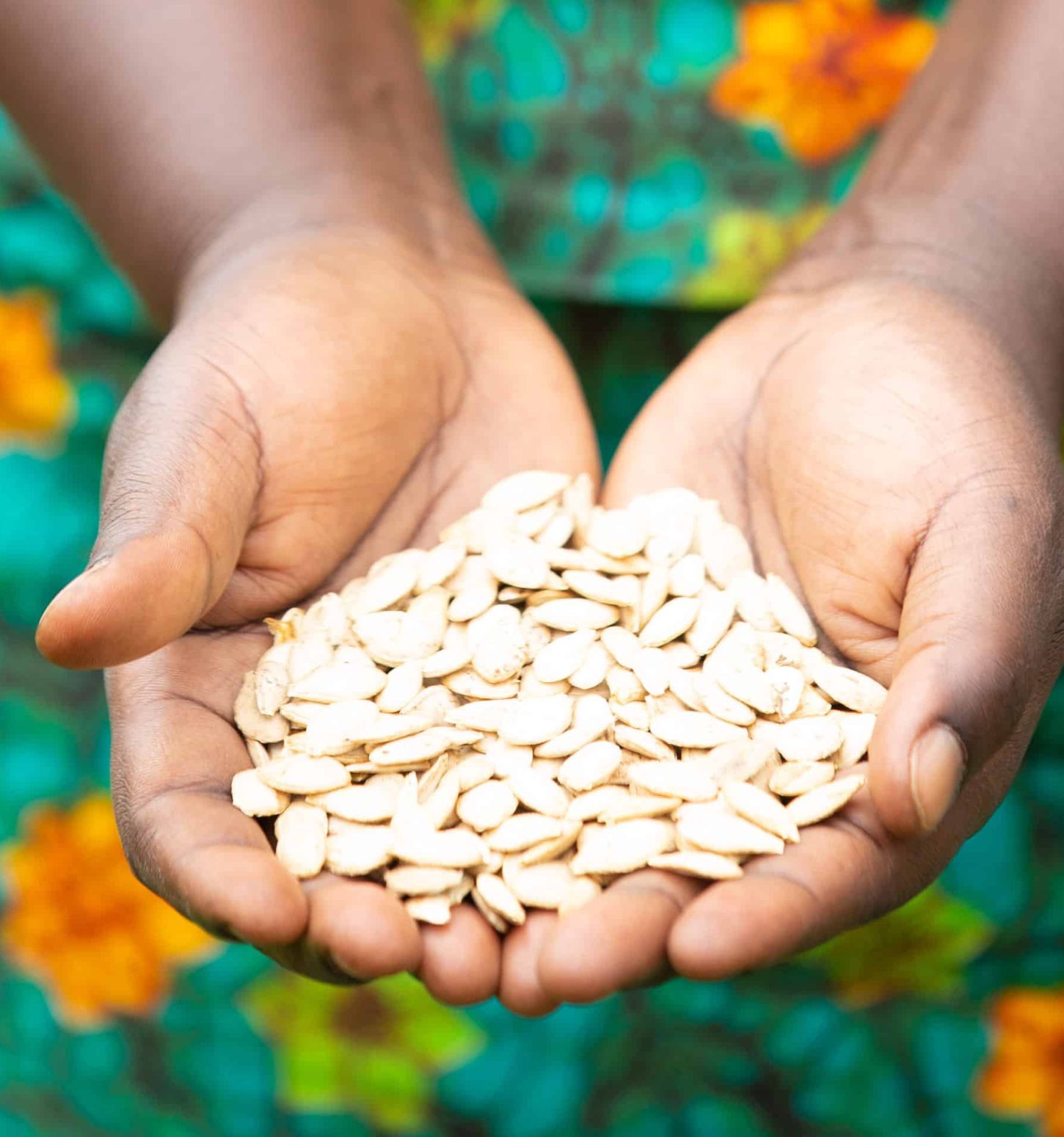
For more than 25 years, Biovision has been supporting local partners in sharing knowledge, promoting local seed and enabling the use of natural fertilizers. This allows families to secure their harvests through their own efforts — independent of global price shocks.
For many people, the link between energy prices, fertilizer production and food production is a new one.
Energy security and food security have always been closely connected. Rising energy prices increase the costs of cooking energy and food transportation, making access to food more difficult. Another important link is that producing fertilizers such as urea requires large amounts of energy and natural gas. Urea prices are already back to similarly high levels as at the end of 2022, when the war in Ukraine escalated. For farmers, this often means a difficult choice: applying less fertilizer and accepting lower yields, or bearing higher costs. Even though the effects on production are still hard to estimate, higher food prices are a likely consequence – and these hit the most vulnerable households hardest, especially in Africa.
Why is Africa particularly affected by these price increases?
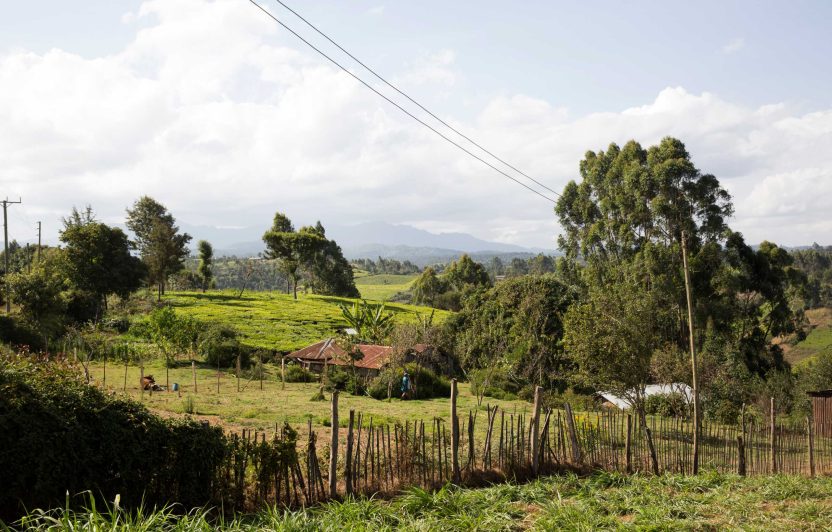
For decades, the so‑called Green Revolution pushed African food systems toward a model of agriculture based on chemical fertilizers, commercial seeds, and other imported inputs – with the goal of combating hunger. This model has made farmers in East Africa increasingly dependent on synthetic fertilizers, while depleted soils have become a growing problem. On top of this, African farmers already pay some of the highest fertilizer prices in the world relative to their income. Global disruptions therefore make them especially vulnerable to price fluctuations.
That requires know-how: fine‑crumb soil, produced entirely naturally through composting. Tanzanian farmer Florian Gitu used the information channels of our partner BvAT to learn.
Are there examples from your work in East Africa that show how dependence on costly agricultural inputs can be reduced?
Ecological farming methods that rely on diversified farming systems, nitrogen‑fixing plants such as legumes, or the use of compost aim to reduce dependence on imported inputs, including synthetic fertilizers, as much as possible.
Is this approach enough?
It is an important component, but certainly not the only one. Policy also plays a key role in enabling wider adoption. This includes, for example, decentralized farmer training networks, well‑equipped extension and advisory services for agroecological methods, or redirecting subsidies away from synthetic fertilizers toward organic and biological alternatives. At the same time, rebuilding soil fertility takes time. Instruments such as insurance schemes or risk‑sharing models can support farmers during this transition phase.
The expansion of an organic fertilizer sector is often mentioned as a solution. How do you assess its potential?
This sector is still being developed in many places and cannot yet supply sufficient quantities. This makes it all the more important to design incentives so that organic fertilizer production strengthens local economic cycles, supports local entrepreneurship, enables fair prices, and gives farmers more autonomy.
What role can agroecology play in making agriculture more resilient to global crises?
Agroecology can play a strategic role because it reduces structural dependence on external, fossil‑based inputs while strengthening farmers’ ability to cope with crises. A central element is diversifying crops and livestock.
Why is diversity in the field so important?
When farmers grow different crops, they can buffer risks more effectively – for example, when pests or extreme weather affect a particular crop. Diverse crop rotations also help keep soils healthy in the long term. Agroecology additionally draws on locally available resources, farmer‑managed seeds, and shared community knowledge and practices. This strengthens local autonomy and reduces dependence on external inputs. In this way, farming communities can maintain greater control over their production systems and build resilient local food systems.
The Ugandan company Agape focuses on producing organic fertilizers. We need more companies like them to meet the demand for natural and locally sourced inputs.
What would need to change for global food systems to become less vulnerable to geopolitical crises?
The spikes in food and fertilizer prices after Russia’s attack on Ukraine showed how vulnerable global food systems are – especially when supply chains are highly concentrated and dependent on geopolitical stability and energy price dynamics. The current conflict in the Middle East is just the latest example. Agroecological approaches and locally developed solutions that rely more on natural resources and processes can significantly reduce these risks. We should finally put these lessons into practice instead of waiting for the next crisis.
A long-term gaol for greater independence
For more than 25 years, Biovision has been supporting local partners in sharing knowledge, promoting local seed and enabling the use of natural fertilizers. This allows families to secure their harvests through their own efforts — independent of global price shocks.
Why we need to fundamentally rethink our food system
In his lecture at the Nobel Talks series, Biovision’s Foundation Board President Hans Rudolf Herren explains why agroecology is a key lever for creating a fair and sustainable food system and what actions need to be taken politically and socially.
Biovision is committed to improving the political framework conditions for agroecology. A key lever: the visibility of enterprises that successfully implement agroecology. These enterprises demonstrate that economic success and social commitment can go hand in hand, providing compelling evidence in favour of sustainable agricultural policies. In the video, we use the example of an award ceremony in Kigali, Rwanda, to demonstrate exactly how we shine the spotlight on these enterprises.
Globally, soil quality is deteriorating at an alarming rate—millions of people are affected, and vast areas of agricultural land are being lost. Charlotte Pavageau from Biovision’s Policy & Advocacy team explains why strong political frameworks are essential, what needs to change, and how agroecology is already making an impact.
«Diversity ensures that we have something to eat every day»
Tanzania reached a milestone in December when it launched its national strategy to scale up agroecology. Mwatima Juma from our partner organisation TOAM explains why this is so important for smallholder families and what role Biovision played in the development process.