Many people associate the fight against land degradation with practical measures like planting trees. Why is political advocacy just as important?
Charlotte Pavageau: Because land degradation is not just an environmental issue—it is a systemic one. It is driven by deforestation, industrial agriculture, and unsustainable land use—often the result of economic and political decisions. Without the right policies in place, even the most effective local projects will remain isolated successes and cannot be scaled up.
What are the key areas where Biovision’s Policy & Advocacy team is active?
We work on both national and international levels to advance agroecological solutions. Nationally, we are engaged in several East African countries, particularly Kenya, Tanzania, and Uganda. We support governments in developing policies that facilitate the transition to agroecology, advocate for reforms in agricultural education, and help establish markets for sustainably produced food.

About Charlotte Pavageau
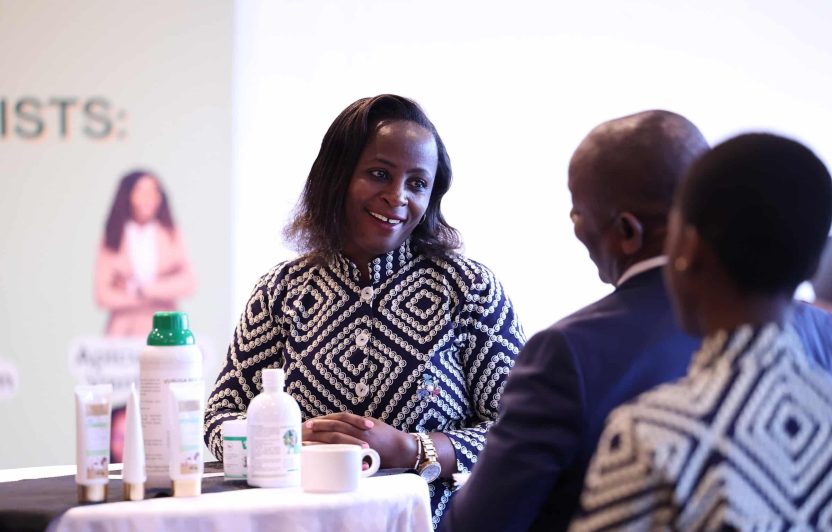
Charlotte Pavageau is Senior Programme Manager Policy & Advocacy at Biovision
And on the international level?
We work to ensure that agroecology becomes an integral part of political discussions worldwide. A great example is the United Nations Convention to Combat Desertification (UNCCD). At the COP16 conference in Saudi Arabia, we successfully pushed for agroecology to be officially recognized as a key tool to fight land degradation. Such achievements are crucial to advancing sustainable agriculture on a global scale and within countries.
What role does Biovision’s Policy & Advocacy team play in these processes?
We act as a bridge between science, practice, and policy. Our goal is to convey the urgency of the problem to decision-makers while providing them with scientifically proven, sustainable alternatives to conventional agriculture. We gather and analyze research on how agroecology can help restore degraded soils, increase yields, and enhance resilience to climate change. These findings are then used in policy dialogues we organize., and Wwe also work with governments, funders, and institutions to establish the necessary policy and financial frameworks to support agroecological transformation.
Why is political action so urgent?
Because we are facing an enormous crisis. Between 2015 and 2019, 100 million hectares of fertile land were lost—an area 25 times the size of Switzerland. This has affected 1.3 billion people. Agroecology offers a powerful response, and we already have impressive success stories demonstrating its impact.
Can you give an example?
Burkina Faso is a great example. In the past, farmers combined crop cultivation, livestock farming, and agroforestry, which helped stabilize the soil and retain water. However, urbanization, deforestation, and intensive agriculture have severely weakened these systems. Today, 31% of the country’s soil resources are estimated to be lost.

How can agroecology help?
A study co-financed by Biovision examined whether associating crops such as millet, sorghum, and maize with tree species like shea or baobab, while increasing the density of the latter, could help restore concerned areas in Burkina Faso. The study compared areas with low tree density to those where 50 or more trees per hectare were planted. The results were striking: agroecological areas saw increased soil moisture, improved water retention, and more stable soils. Economically, the approach provided an added value of over 30%. This study offers concrete evidence that can help convince policymakers to invest in agroecology as a viable solution.
If agroecology is so successful, why isn’t it being widely implemented?
One major barrier remains financial and policy support. Despite extensive scientific evidence proving the benefits of agroecology, many governments and investors still prioritize high-input, intensive agricultural systems because they promise short-term yields. However, these approaches make soils more vulnerable to erosion and extreme weather conditions. For agroecology to take hold on a large scale, we need state-supported programs that provide farmers with targeted training and incentives. Additionally, access to markets for sustainably produced food must be improved.
What message would you like to send to policymakers?
We have no time to lose. If we do not act now, up to 216 million people may be forced to migrate due to droughts, depleted soils, and declining harvests. Agroecology is a proven solution. It protects soils, secures food production, and strengthens agricultural resilience. Policymakers now have a choice—either they invest in sustainable solutions today, or they will face even greater crises tomorrow. The time to act is now.