The Swiss government is once again cutting funding for long-term international cooperation. How do you assess this development?
These cuts are deeply concerning and, from a strategic perspective, they are the wrong decision. Development cooperation is inherently long-term. It works preventively by creating stability, security and opportunities for the future. That is exactly what the world needs right now. By reducing these investments, the Federal Council is achieving the opposite.
The government argues that future efforts should focus primarily on humanitarian aid. Why do you believe that is not enough?
Humanitarian aid is essential, but it addresses the symptoms rather than the causes of crises. It comes into play once a crisis has already unfolded. Long-term development cooperation starts much earlier. It strengthens local structures, creates opportunities and enables people to secure their livelihoods over the long term. This reduces vulnerability to future crises and makes emergency assistance less necessary in the long run.
You speak about prevention. What does development cooperation achieve in concrete terms?
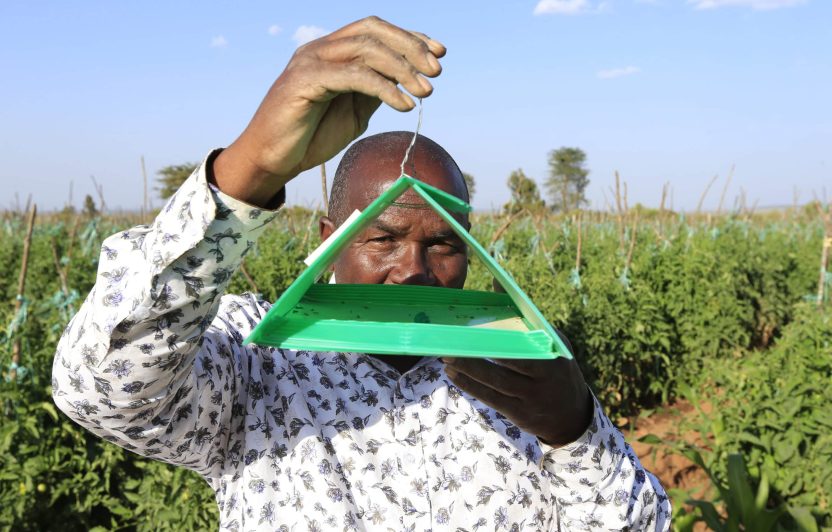
Let me use Biovision’s work as an example. Our projects address existing gaps. We share knowledge about farming methods that reduce dependence on global markets while strengthening long-term food security. We support businesses that apply or further develop agroecological approaches – business models that deliberately combine social responsibility with environmental sustainability. At the same time, we advocate for the political frameworks needed at regional, national and international levels. In doing so, we help build sustainable local food systems that provide people with sufficient and diverse food while improving health, well-being and incomes. This is precisely where the preventive impact lies: when people can secure their livelihoods over the long term, potential sources of crisis begin to disappear. But this requires a long-term perspective. Such change does not happen overnight.

So meaningful change takes time. Why is reliability so important in international cooperation?
Our goal is to build sustainable and fair food systems. That requires time, perseverance and long-term commitment. We are not aiming for quick wins, but for lasting transformation. Of course, there are setbacks along the way. Yet long-term engagement allows us to learn from them and continuously improve our work. Reliability is essential – both for our partner organisations and for our donors and funding partners. They need to know that we use the resources entrusted to us effectively and responsibly. That is the standard we hold ourselves to.
Biovision works with local partner organisations and prefers the term “international partnerships” over “development cooperation.” Why is that distinction important?
Unlike many organisations, we deliberately operate without our own country offices. Instead, we work exclusively through local partner organisations. The structures already exist on the ground; our role is to strengthen them so they can further develop and increase their impact. We believe in partnerships based on mutual respect and equality. Lasting success can only be achieved together. That requires trust on both sides – and trust takes time to build. Because we work this way, we know our partners extremely well. They also know that they can rely on us as a committed partner focused on achieving real impact. After all, we have a responsibility to those who support our work financially.
Biovision also receives funding from the Swiss Agency for Development and Cooperation (SDC). How will the current budget cuts affect your work?
The SDC programme contribution is very important to us. The current funding phase runs until the end of 2028. However, Parliament may decide on further reductions during its annual budget process. Looking beyond 2028, we must also prepare for the possibility that these contributions will be reduced even further or even phased out entirely. That is why we are already developing different scenarios to respond to potential cuts, for example by diversifying our funding base and prioritising our activities. Our goal remains unchanged: to safeguard the long-term impact of our work.
These budget cuts are accompanied by growing criticism of development cooperation in general. Many people question whether it really works. What has convinced you personally that long-term partnerships make a difference?
During my travels I have visited many projects and businesses and met highly skilled and dedicated people who are driving real change in their communities. The impact of development cooperation is often not reflected in impressive statistics, but in tangible improvements to people’s lives. Last year, for example, our partner organisations in Kenya helped bring about a change in legislation that had prevented farmers from exchanging seeds. At first glance, this may seem like just a small legal amendment. In reality, however, it improves the livelihoods of thousands of people. Our support should therefore be understood as an investment in the future – an investment in people, in institutions and in sustainable development. That is precisely why it would be a serious mistake for a wealthy country like Switzerland to cut back in this area.
What happens if long-term development work disappears? What consequences do you see for the affected communities, but also for Switzerland and Europe?
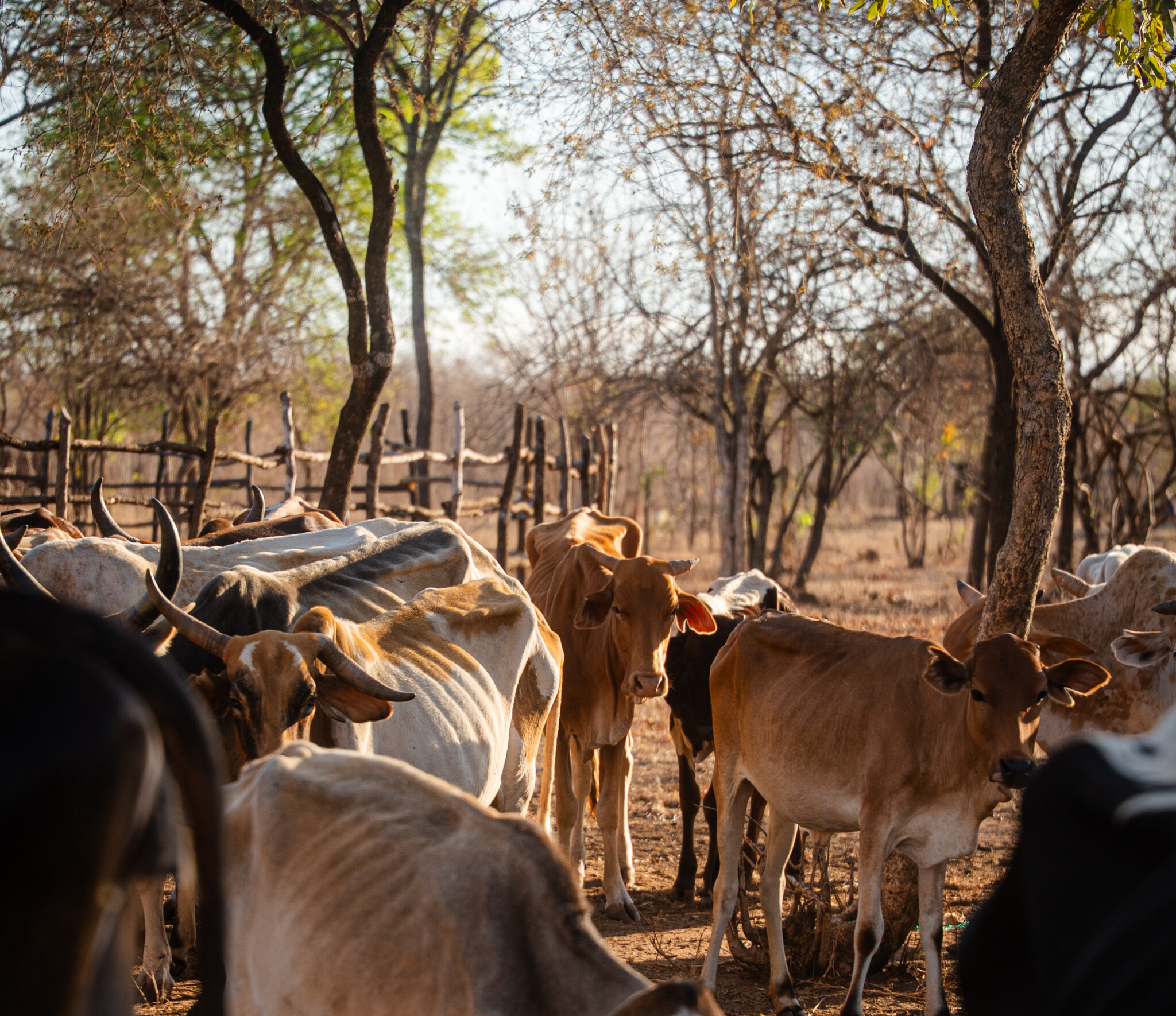
East African countries have enormous potential. That makes the region attractive to global investors, whose interests do not always align with those of local communities. Long-term development cooperation helps counterbalance this by strengthening local institutions and promoting resource-efficient production systems. Ultimately, that is also in the interest of Switzerland and Europe. Where people have opportunities and prospects for the future, societies become more stable and the risks of crises and conflict decline.
If you could send one message to political decision-makers in Switzerland, what would it be? Why is investing in long-term international partnerships so important right now?
The world is undergoing profound change. For a small country like Switzerland, stable and prosperous global conditions are of fundamental importance. That is precisely why we should step up and take responsibility at a time when others are scaling back their support for development cooperation. At the same time, we should not forget that countries in the Global North protect their markets through tariffs and support their own agriculture with subsidies. Countries in the Global South do not have the same opportunities. Through our work, we can help reduce these inequalities and create fairer conditions for everyone. For a prosperous country like Switzerland, this is not only in our own interest – it is also a matter of moral responsibility.

Anders Gautschi, CEO of Biovision
Trained as an agricultural scientist, he has many years of experience in agriculture, environmental policy and non-profit management, including roles at the Swiss Federal Office for Agriculture, the Swiss Federal Office for the Environment, and most recently as Director of the Transport and Environment Association (ATE).