Greener Greens: Biovision Shapes a Green Future
In Kenya’s Murang’a County, agroecology is legally enshrined—a milestone. Through our Greener Greens project, we aim to expand agroecological vegetable farming in the region while enhancing overall agriculture. From water management to balanced diets and sustainable job opportunities, the project addresses multiple aspects of agricultural sustainability.
Context: Challenging Conditions for Agriculture
In East Africa, intensive farming and excessive use of chemicals, especially in vegetable farming, have adverse effects on people and the environment. To address these challenges, Murang’a County has legally embedded agroecology into its policies.
Since 2021, Biovision has supported a project by our partners, the World Vegetable Center (WorldVeg) and the Netherlands Development Organisation (SNV), to introduce smallholder farmers in Murang’a to agroecological vegetable farming methods. In the next phase, covering Murang’a and a neighboring county, WorldVeg will continue collaborating with farmers to optimize agroecological vegetable production. This phase will also focus on improved water management to enable vegetable farming during the six-month dry season. Additionally, the integration of vegetable farming into broader agricultural systems will be strengthened.
Given the widespread issue of malnutrition, the project will also organize events, media initiatives, and cooking classes to encourage the public to adopt diets rich in healthy, organically produced vegetables.
Lastly, pilot projects in market and microbusiness approaches will be launched to create income opportunities for unemployed youth and women.
Goals: Higher Incomes, Healthier Families
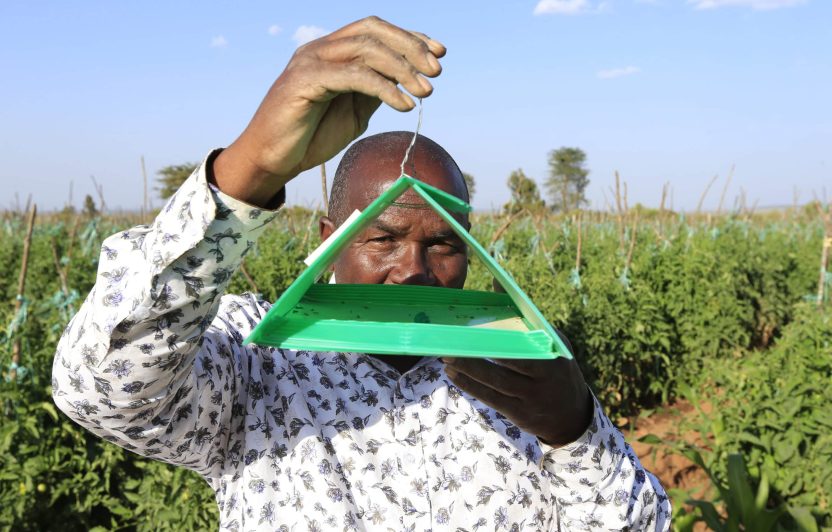
Our primary goal is to encourage more farmers in the region to adopt sustainable practices for their vegetable farming. This will protect nature and biodiversity while increasing yields and incomes for farming communities.
In the first phase, we demonstrated that agroecological practices significantly benefit smallholder vegetable farming systems, making them more resilient to environmental impacts.
Now, the focus is on convincing more farmers to adopt agroecological practices—not just for vegetable farming but also for cereal and fruit crops, livestock management, and resource use, including water.
We also aim to connect key players along the value chain to create new markets for agroecological products.
At a glance
Beneficiaries: Kenya
Partner organizations:
World Vegetable Center
Participants: Bäuerinnen und Bauern Youth
Project Officer:
Project phase: 2024-2026
The project addresses the following SDGs from UN Agenda 2030:
Region
Topics
Impact to Date: Sustainable and Efficient
Together with our local partner, we have taken initial steps to make farming in the region more eco-friendly. Training sessions and scientific monitoring have shown that these practices are effective. Hundreds of farmers have already increased their incomes. Many now meet regularly in groups—so-called Vegetable Business Networks—to exchange ideas and address challenges. These networks enhance their role in the value chain, turning them into influential players.
Facts and figures about the project
farmers benefit directly from the project
farmers benefit indirectly from the project
Next Steps: Tackling Youth Unemployment
The next phase aims to make not only vegetable farming more sustainable and efficient but also to transform entire farming operations. From improved water management to sustainable livestock practices and diversified farming, these changes will lead to healthier diets. Hundreds of farmers will be involved in this second phase.
Additionally, we will explore ways to address youth unemployment in the region. Sustainable farming practices open up new markets, such as selling seeds, seedlings, or organic fertilizers. We aim to engage young people in these markets, providing them with stable income opportunities.
Through training sessions and networking events, we will ensure farmers gain better access to markets, enabling them to sell their produce more effectively. This approach ensures that the positive changes are sustainable and that agroecology spreads as an economic model.
More about this or similar projects
About us, Agriculture
Why we need to fundamentally rethink our food system
In his lecture at the Nobel Talks series, Biovision’s Foundation Board President Hans Rudolf Herren explains why agroecology is a key lever for creating a fair and sustainable food system and what actions need to be taken politically and socially.
Markets, Politics
Making agroecology visible: A Biovision approach
Biovision is committed to improving the political framework conditions for agroecology. A key lever: the visibility of enterprises that successfully implement agroecology. These enterprises demonstrate that economic success and social commitment can go hand in hand, providing compelling evidence in favour of sustainable agricultural policies. In the video, we use the example of an award ceremony in Kigali, Rwanda, to demonstrate exactly how we shine the spotlight on these enterprises.