Push-Pull: Fighting pests while improving nutrition

Small farmers in Kenya and Tanzania are using Push-Pull to successfully control pests. This organic farming method also has a positive effect on the soil and the climate. Above all, however, it increases harvest yields and nutritional diversity.

Context: fighting pests and strengthening the soil

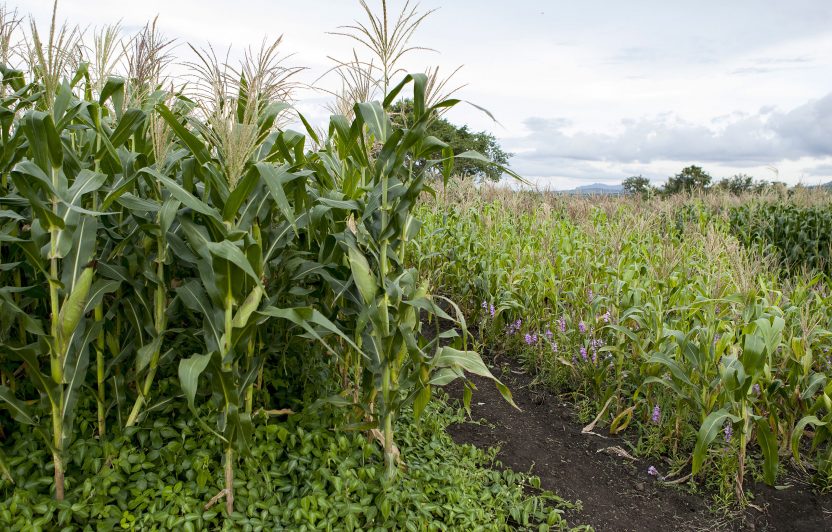
By planting Desmodium between rows of maize, kale and vegetables, pests are repelled (“pushed”) and at the same time attracted (“pulled”) by Napier grass or Brachiaria planted around the fields. Napier grass, Brachiaria and Desmodium are all healthy supplemental feed for livestock and help retain moisture in the soil – and they help increase soil fertility: all three contribute to depositing more carbon in the soil (due in part to their large root masses), but they are also useful for sustaining soil structure and living organisms. In addition, Desmodium fixes atmospheric nitrogen and pumps it into the ground, which has a positive effect on the soil’s nitrogen balance (very important for maize and millet).
Through this innovative approach, small farmers can control pests, reduce the soil from drying out and improve soil fertility naturally.

Goals: Push-Pull - Scientifically proven for healthy nutrition and greater safety

- The benefits of push-pull are scientifically proven.
- Smallholder farmers integrate the Push-Pull approach in cultivating maize, vegetables and millet.
- The health of people involved in the project improves thanks to a more balanced diet and food and income security.

At a glance

Project name:

Push-Pull: Diversity through Participatory Research
Beneficiaries:
Kenya
Tanzania
Partner organizations:

International Centre of Insect Physiology and Ecology (icipe), Kenya
Sustainable Agriculture Tanzania (SAT)

Project budget in CHF :

184575
Participants:
Smallholder farmers
Project Officer:
Project phase:
2026 (Phase 3)
The project addresses the following SDGs from UN Agenda 2030:

This project is supported by SDC

Region
Topics

Impact to date: successful spread and extended application for higher yields

Biovision has been supporting projects to spread Push-Pull in Kenya since 2006. The approach was applied later in Tanzania, Uganda and Ethiopia, and since 2016 also in Malawi, Zambia, Zimbabwe, Rwanda, Burundi and Burkina Faso.
While the method was originally developed for cultivating maize and millet, our project partner, icipe, began integrating vegetables with maize and millet in the Push-Pull system in 2020. These trials have shown that the method provides significant protection against several major vegetable pests, thus leading to increased yields.

Facts and figures about the project

small farmers will be trained in Push-Pull
small farmers in Kenya and Tanzania aim to increase their yields and incomes through the successful application of Push-Pull

Next steps: Anchoring Push-Pull 

In the new phase, the Push-Pull system will be firmly anchored in village communities. In Homabay, Kisumu and Kiambu, 100 new smallholder farmers will be trained in each region. They will learn how to adapt the Push-Pull technology to their local conditions – for example by combining it with vegetable production, livestock keeping or forage crops.


The goal is to scale the method in a way that allows it to function sustainably even without project support. To this end, "living labs" will be established, peer-to-peer training structures set up, and new knowledge-sharing methods tested.


A special focus is on the availability of planting material: the project promotes local seed banks and supports the registration of companion plants like desmodium. This will give farmers long-term access to high-quality seeds. Marketing of seeds and products will also be strengthened through partnerships with local companies.


Learn more about Push-Pull in this video
Donate now

With your support, you make a significant contribution to fighting hunger and poverty, building confidence and strengthening self-determined living. The ZEWO seal of approval guarantees a conscientious and cost-conscious use of your donations.

CHF
CHF
CHF
CHF custom amount

To support this project or get further information, please contact

Sharon Nehrenheim
Head of Communication & Fundraising, Member of the Executive Committee
+41 44 512 58 13

More about this or similar projects

Agriculture

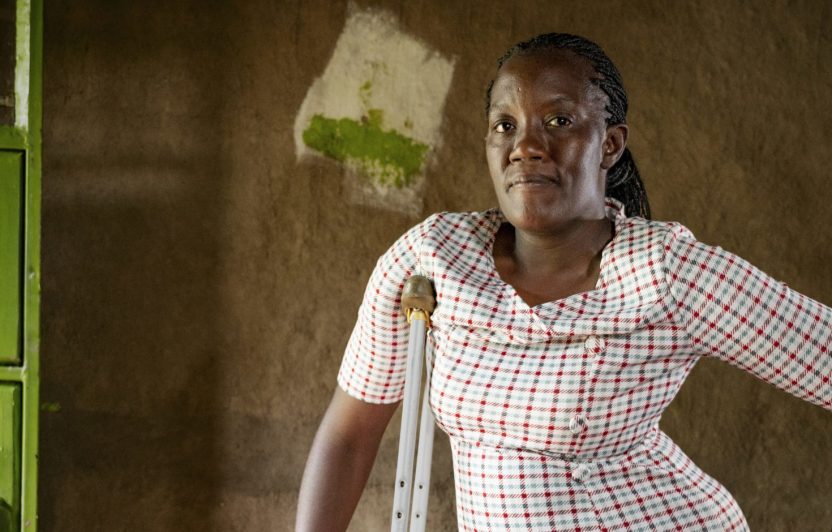
“Today I am no longer dependent on anyone.”

Beryl Atieno Munika has lived with a physical handicap since birth. As a young woman she was dependent on her parents. Then she attended a course in organic farming and took fate into her own hands.
Agriculture

Thriller in the cornfield

Within arable fields and soils rages a battle to the death. At least in the push-pull fields of East Africa, beneficial insects are gaining the upper hand over pests. Decisive is communication among plants and between plants and insects.
Agriculture

Wasps Save Africa’s Maize Harvests

The fall armyworm has spread across the African continent at an incredible pace and robbed millions of farmers of their livelihoods. Synthetic pesticides have proven to be ineffective, but rescue is now in sight: Biovision’s partner organization icipe has found an ecological solution to the plague this pest has created.
Agriculture

Welcome hangers-on

Many smallholder farming families in East Africa benefit from the push-pull environmentally friendly grain cultivation method. But that’s only half the story.