Innovative approach to fighting malaria
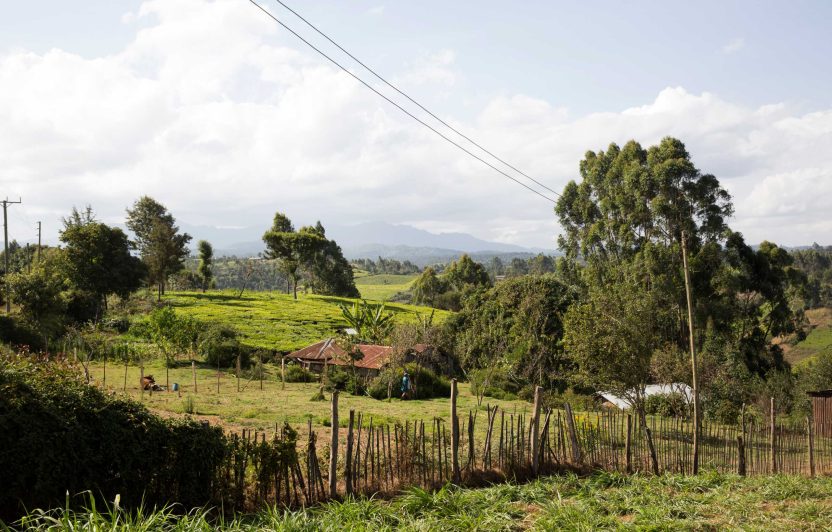
Whoever lives in the vicinity of their livestock in Kenya is at increased risk of contracting malaria or another potentially deadly disease. Through an innovative research project, Biovision is making a virtue of necessity.
This project has been completed. The information on this page shows the path Biovision took in collaboration with local partners – and the approaches that were central to it.
Context: the fight begins on the ground
Malaria, sleeping sickness, dengue fever and other insect-borne diseases continue to present grave health risks to humans and their livestock. This Biovision project is employing a new approach: Animals act as a kind of “natural decoy” to attract insects, which are killed using a newly developed, environmentally friendly insect repellent. This will reduce the number of disease vectors and help protect humans and animals.
Goals: promoting health, sharing knowledge, reducing risks
With this project, Biovision aims to improve animal health and reduce the risk of human infection. Our local project partner, icipe, is relying on a participatory research approach that involves the local population in the research.
We also inform the local population of correlations and risks associated with infectious diseases. Among other activities, we want to design and build a model “Healthy Home” using locally available materials, in which simple measures significantly reduce the number of pathogens in and around the house.
At a glance
Project name:
Malaria in Kenya
Beneficiaries: Kenya
Project budget in CHF :
307854
Participants: Cattle herding families Community Health Officers Government employees Local NGO workers Rural communities
Project Officer:
Project phase: 2019-2024
Partner organizations:
Internationales Insektenforschungsinstitut Icipe (Kenia)
The project addresses the following SDGs from UN Agenda 2030:
Region
Impact to date: learning together creates change
The project is meant for different target groups and works using a holistic approach. Participatory health research has been successful: through our 40 community meetings and training sessions, we have reached 1733 people in the regions of Busia and Kwale. Participants learned more about infectious disease risks and possible protective measures. Additionally, 10 health officers in the communities were trained to reduce infections and use the insect repellent.
Through the model houses, 239 representatives from the villages learned how they can better protect their health with simple measures in and around the house. These include a latrine and a more efficient stove that uses charcoal briquettes instead of wood.
Next steps: utilising findings, mastering challenges
The insect repellent specially developed for this project significantly reduced disease vectors in laboratory tests, but when applied in practice in the villages, this could not be confirmed. We will next evaluate the experiences and analyze the causes to find out why the project did not have the expected effect. Our partner organization is also conducting a household survey on the use of insect repellents and preparing similar trials in western and coastal Kenya.
The training sessions with the model houses were met with great interest. Together with community health officers, icipe will now plan upcoming training courses and print necessary materials.
More about this or similar projects
Markets, Politics
Making agroecology visible: A Biovision approach
Biovision is committed to improving the political framework conditions for agroecology. A key lever: the visibility of enterprises that successfully implement agroecology. These enterprises demonstrate that economic success and social commitment can go hand in hand, providing compelling evidence in favour of sustainable agricultural policies. In the video, we use the example of an award ceremony in Kigali, Rwanda, to demonstrate exactly how we shine the spotlight on these enterprises.

Politics
“Agroecology is key to restoring fertile soils”
Globally, soil quality is deteriorating at an alarming rate—millions of people are affected, and vast areas of agricultural land are being lost. Charlotte Pavageau from Biovision’s Policy & Advocacy team explains why strong political frameworks are essential, what needs to change, and how agroecology is already making an impact.

Agriculture
From Zurich to Ethiopia
Accompany our reporter on his journey from his desk to the project area in Ethiopia: See for yourself how reforestation and clever techniques have brought lasting change to this once arid country.