Camels and invasive plants provide a crisis-proof income
In the Samburu district of Kenya, Biovision is relying on camels and the innovative use of invasive plants. With them, herders can cope better with challenges such as climate change.
This project has been completed. The information on this page shows the path Biovision took in collaboration with local partners – and the approaches that were central to it.
Context: A sustainable system under pressure
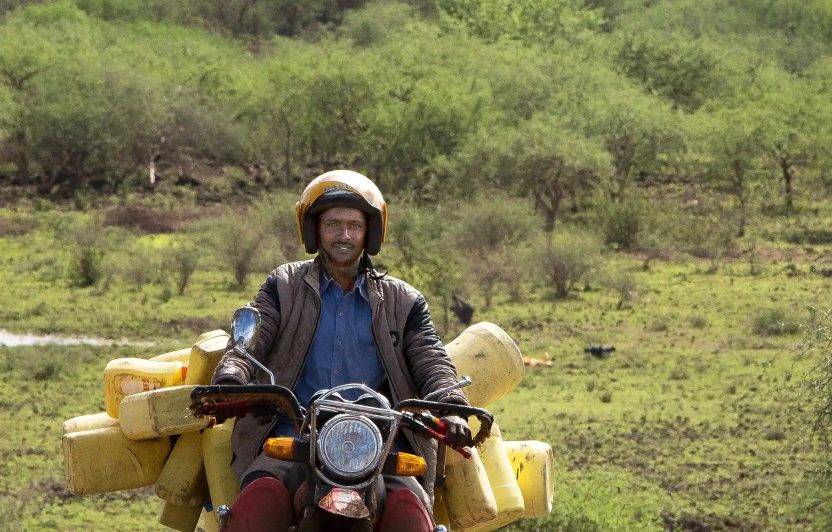
In the arid region of Samburu in northern Kenya, mobile pastoralism is the most important source of income for the population. In the vast, sparsely populated landscape, rainfall is infrequent, localized and unpredictable. But as soon as the soil becomes even slightly moist, grass sprouts surprisingly quickly and the landscape, which seemed parched before, turns green overnight. The herders in Samburu know their ecosystem intimately and over generations have developed strategies to be in the right place at the right time with their cattle, sheep and goats – exactly where the rain has just fallen and where the best food is for the animals. This sustainable form of animal husbandry is the only sensible way to use the dry area for agricultural purposes.
Mobile pastoralism is coming under increasing pressure, however: Droughts are becoming longer, invasive plants are spreading, and the Samburu have lost important grazing land to wealthy private individuals and national parks. As a result, there is less grass available for animal fodder.
Goals: From innovation and camels to crisis-proof incomes
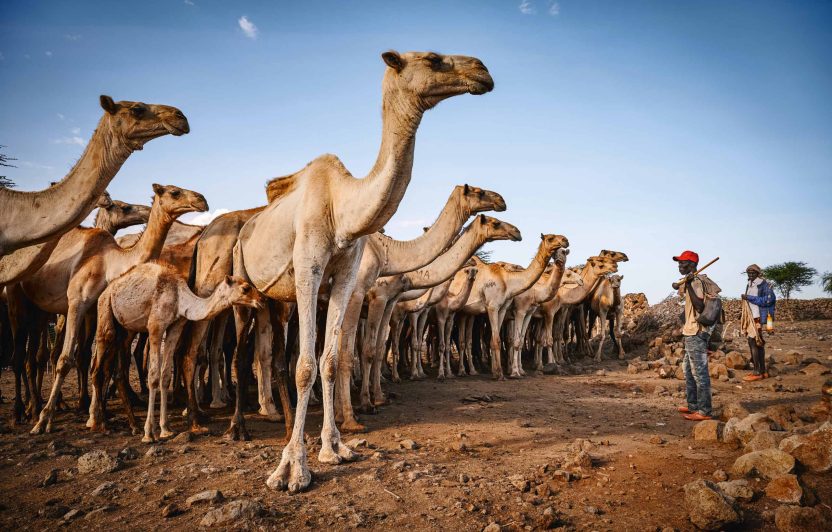
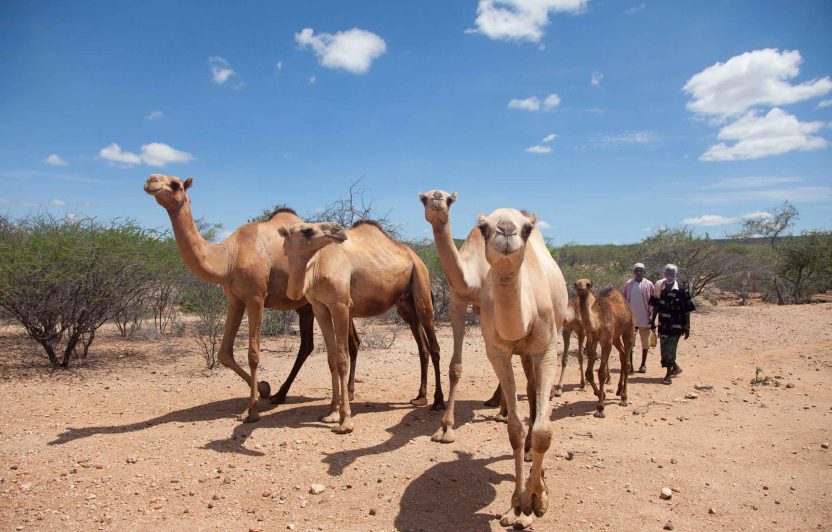
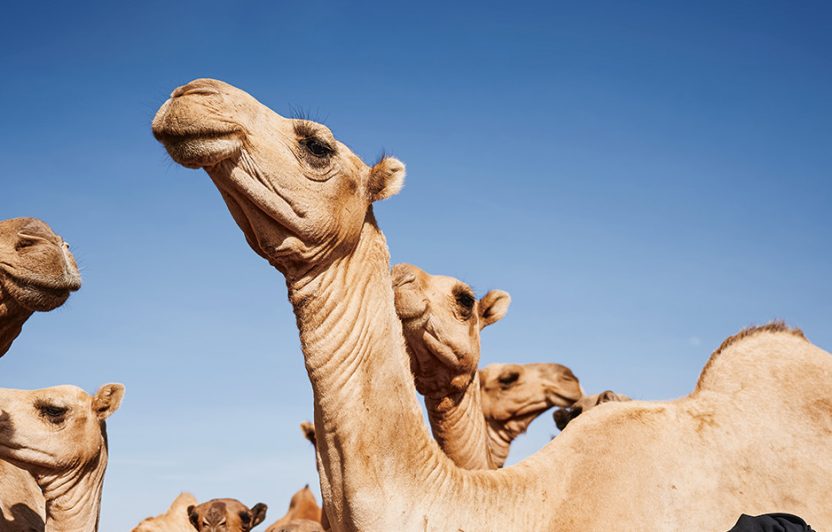
To face these challenges, our partner organisation VSF has developed a comprehensive approach. First, invasive plants are processed into feed cubes that are used as supplementary feed for cattle, sheep and goats. Second, VSF supports the introduction of camels: They are more tolerant of drought than other animals and, thanks to their size and digestive system, can eat leaves from trees that other animals cannot use as a food source. Third, VSF is encouraging the establishment of camel milk cooperatives to enable further processing and higher incomes. Last but not least, VSF is working with the government to develop a system for recognizing and containing infectious diseases in animals and humans early.
At a glance
Project name:
Sustainable Rangeland Management in Kenya
Beneficiaries: Kenya
Partner organizations:
VSF - Vétérinaires Sans Frontières Suisse
Project budget in CHF :
674567
Participants: Cattle herding families
Project Officer:
Project phase: 2023-2025
The project addresses the following SDGs from UN Agenda 2030:
This project is supported by SDC
Region
Topics
Next steps: Continuing education for government employees
VSF is currently training government employees in managing camels and handling camel milk so that they can support herders who are interested in working with the animals and processing the milk.
More about this or similar projects
Agriculture
“Camels are the future”
The main rainy season in North-East Kenya normally runs from the beginning of March to the end of May. But more and more the rain simply does not come. With its project to reintroduce camels, Biovision is helping to develop a model that will alleviate the effects of drought.
Agriculture
Major steps to improve animal health
If goats, sheep, cattle or camels fall sick, their owners suffer too. When faced with this situation, livestock farmers in rural Africa usually have to cope entirely on their own. The project “Camels for drought areas” in Kenya is seeking to improve this.