Combating the drought with clever ideas

Biovision is collaborating with smallholder farming families, authorities, and scientists in central Tanzania to test and implement agroecological methods to combat drought and erosion. Trenches, dams, and resilient crop varieties are helping to address drought and irregular rainfall in the Kongwa district.

Initial situation: Harsh climatic conditions

Smallholder families in the arid regions of central Tanzania farm under the most difficult conditions. They grow maize and millet on small, barren plots of land. The area has an extended dry season lasting several months and the farmers have to cope with irregular rainfall. Droughts during the rainy season repeatedly lead to complete crop failures. At the same time, heavy rainfall, especially at the beginning of the growing season when the fields are still bare, washes away fertile soil and freshly planted seeds, destroying the basis for farming. 

Goals: Resilient farmland

To sustainably improve agricultural productivity – and with it the income and food security of smallholder families – Biovision is working together with the International Livestock Research Institute (ILRI) and the International Crops Research Institute for the Semi-Arid Tropics (ICRISAT), applying community-based, landscape-oriented and participatory approaches. The aim is to enhance the sustainability and drought resilience of smallholder farming systems. The project is now working with around 600 farmers and farmer groups in two districts of central Tanzania.


At a glance

Project name:

Trenches against drought
Beneficiaries:
Tanzania
Partner organizations:

International Livestock Research Institute (ILRI)

Project budget in CHF :

430800
Participants:
Smallholder farmers
Project Officer:
Project phase:
2024-2026
The project addresses the following SDGs from UN Agenda 2030:

This project is supported by SDC

Region
Topics
Porträt von Peter Ngowi, Projektverantwortlicher ICRISAT in Kongwa, Tansania
"We dig trenches, seedlings grow ... It's a slow process, but I can see how the region is gradually becoming green again."
Peter Ngowi, Icrisat project manager in Kongwa, Tanzania

Effect to date: longer cultivation windows, fertile soils

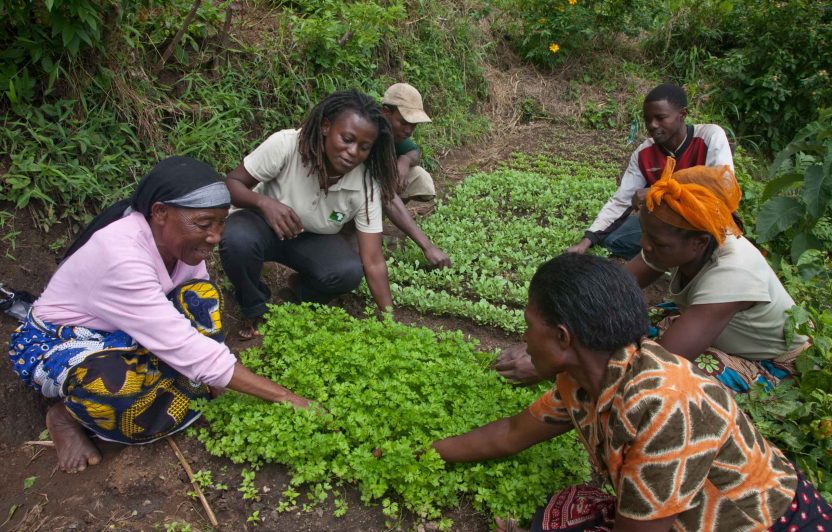
Tried and tested measures include dams and ditches along the slopes, which help to slow down the flow of water and the associated erosion of the soil. As a result, more rain seeps into the fields and farmers can significantly extend their growing season. The introduction of drought-tolerant mixed crops and trees also helps to restore soil fertility and increase yields. This increases farmers' incomes, diversifies the diet of smallholder families and generally helps to make local agriculture more profitable and resilient. 

In addition, the project promotes Farmer Managed Natural Resource Management (FMNR), enabling farmers to protect and regenerate trees and natural vegetation on their land. A new demonstration site is also being established to showcase agroecological practices and foster knowledge exchange between farmers and agricultural institutions.

Facts and figures about the project

Smallholder families in the Kongwa district have increased their income and improved their food security.

Next steps: Involving livestock farming

In future, we want to tackle several issues together with our local partners and farming families:  

Firstly, we need to communicate even more about the benefits and achievements of this type of agriculture. The benefits of trenches, drought-resistant mixed crops and cleverly planted trees should receive more attention from the population.  

This means that the authorities also need to be more involved in the projects. Farming families should adopt similar measures to cope with irregular rainfall, not just regionally, but increasingly throughout the country.  

Secondly, in the next phase, we want to bring this new type of land cultivation into even better harmony with local livestock farming. The farmers' animals should also benefit from the surplus of planted vegetables and thus be able to count on an additional source of feed even in the drier months. This ensures healthier chickens that lay more eggs and cows that ideally even produce milk during periods of drought, thus providing farming families with additional sources of income and a balanced diet. 

Donate now

With your support, you make a significant contribution to fighting hunger and poverty, building confidence and strengthening self-determined living. The ZEWO seal of approval guarantees a conscientious and cost-conscious use of your donations.

CHF
CHF
CHF
CHF custom amount

To support this project or get further information, please contact

Sharon Nehrenheim
Head of Communication & Fundraising, Member of the Executive Committee
+41 44 512 58 13

More about this or similar projects

Agriculture

From Zurich to Ethiopia

Accompany our reporter on his journey from his desk to the project area in Ethiopia: See for yourself how reforestation and clever techniques have brought lasting change to this once arid country.
About us

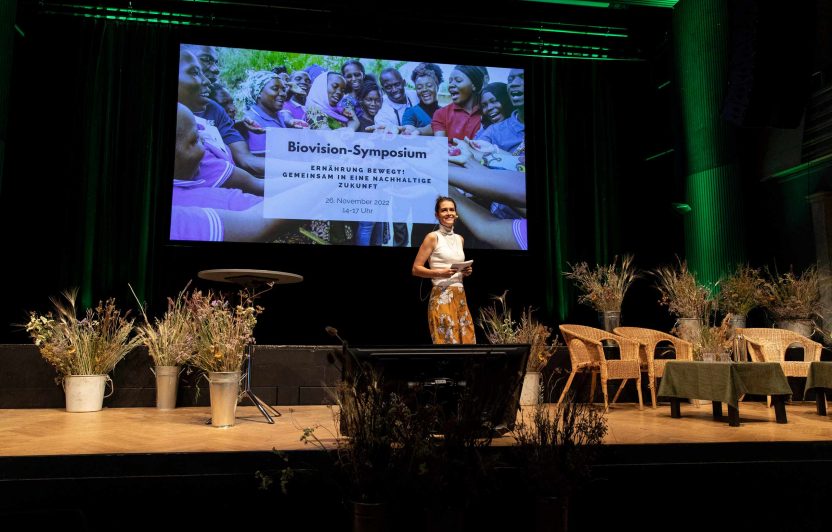
Symposium 2022 review – Food makes a difference!

Together towards a sustainable food system – How do we get there? At the 2022 Biovision Symposium we learned about solutions and challenges for a food system of the future. Here you find impressions from the event and info about “food movements” that strengthen local communities and promote a shift towards organic agriculture.
Agriculture

Organic: Eagerness to Engage in East Africa

Organic production – not only for export – presents enormous potential for East African farmers. Particularly thanks to social media, awareness of healthy food has risen sharply in recent years, especially among the urban population.
Agriculture

Wasps Save Africa’s Maize Harvests

The fall armyworm has spread across the African continent at an incredible pace and robbed millions of farmers of their livelihoods. Synthetic pesticides have proven to be ineffective, but rescue is now in sight: Biovision’s partner organization icipe has found an ecological solution to the plague this pest has created.