Based on the outcomes of the Rio+20 conference in June 2012, Biovision Foundation is currently involved in achieving a change in course in global agriculture, both on the global and national levels.
One of the main outcomes of the Rio+20 Conference was the agreement by member States to launch a process to develop a set of sustainable development goals (SDGs) that could be a useful tool for pursuing focused and coherent action on sustainable development. The discussion paper which reflects the views of Alliance Sud, Berne Declaration, Biovision – Foundation for ecological Development, Bread for all, HELVETAS Swiss Intercooperation, HEKS, Millennium Institute and Swissaid, may serve as a basis for discussion on a possible SDG/Post-2015 goal on Food Security and Nutrition, and Sustainable Agriculture.
Within the Committee of World Food Security (CFS) in Rome, Biovision is working on an effective follow-up to the Rio output, trying to ensure that the Committee takes up its designated role to facilitate country-initiated assessments of its agricultural policies. More about the mandate of CFS in our Newsletter No. 25...
At the national level Biovision and the Millennium Institute are preparing national assessments of the agricultural sector in three African countries within the next two years. Process launched in Kenya and Senegal...
Background
Today, almost one billion people are suffering from malnutrition. The volatility of prices of staple food causes additional concerns about international food security. 70% of the poor in developing countries live in rural areas, directly or indirectly depending on agriculture for their livelihood. The World Bank’s World Development Report 2008 has shown that investments in agriculture contribute more to Gross Domestic Product (GDP) growth and the ultimately eradication of poverty than investments in other sectors. The International Assessment of Agricultural Knowledge, Science, and Technology for Development (IAASTD), called for a paradigm shift in agricultural policies and practice. This paradigm shift includes a stronger focus on smallholder agriculture, embracing locally adapted cultivation methods, optimizing the multi-functionality of agriculture, and redirecting agricultural knowledge, science and technologies to address hunger, poverty and livelihoods of resource-limited rural people.
In order to support the goal of the IAASTD report and to help make a global change in agricultural policy a reality, Biovision Foundation and the Millennium Institute are involved in this process at various levels.
In a first phase, this goal has been pursued on the global level: During the pre-negotiations for the UNCSD Rio+20 Summit, Biovision Foundation and partners have been advocating for a transition to sustainable agriculture and agro-ecology. An International Organisation was to be mandated to advise countries upon request on such a transition.
As a result of these efforts, governments retained the following passages in the final Food Security and Agriculture Chapter of the Rio+20 Declaration:
§111 “We reaffirm the necessity to promote, enhance and support more sustainable agriculture, including crops, livestock, forestry, fisheries and aquaculture, that improves food security, eradicates hunger and is economically viable, while conserving land, water, plant and animal genetic resources, biodiversity and ecosystems and enhancing resilience to climate change and natural disasters. We also recognize the need to maintain natural ecological processes that support food production systems."
§115 “We reaffirm the important work and inclusive nature of the Committee on World Food Security, including through its role in facilitating country-initiated assessments on sustainable food production and food security."
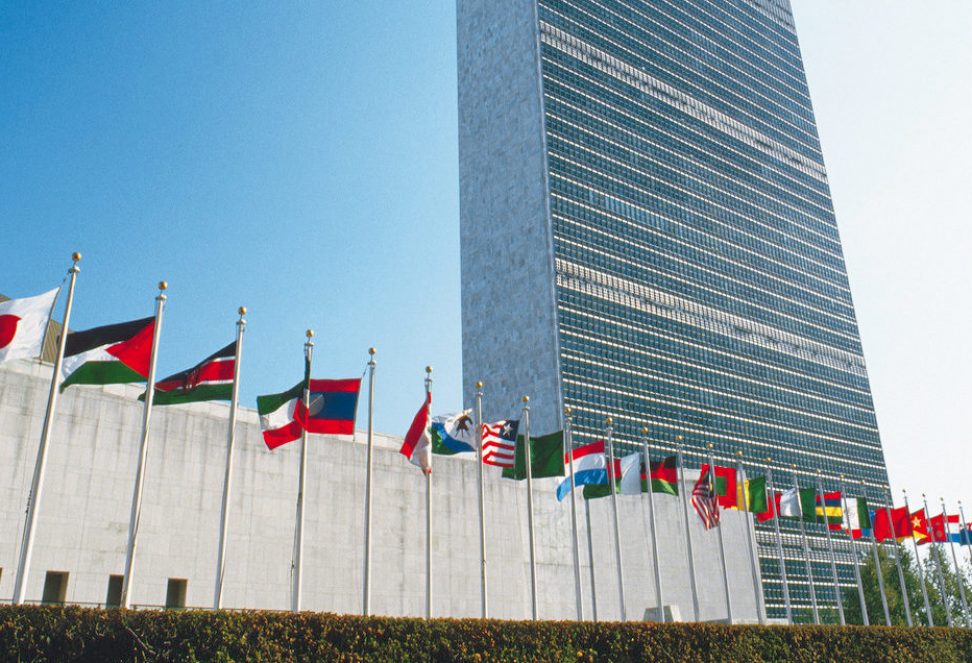
Important headway for the Rio negotiations was made early this year, when Biovision and the Millennium Institute - with the support of the Swiss Agency for Development Cooperation (SDC), the Mercator Foundation Switzerland, the World Society for the Protection of Animals, the Heinrich Böll Stiftung, the Development Fund and the More and Better Network - organised a High Level Roundtable on Food and Nutrition Security and Sustainable Agriculture on 15-16 March 2012 in New York. This Conference was organised to gather close to eighty high-ranking government representatives, international organisations, scientists and NGO representatives. During the Roundtable, participants sought to reach a common understanding on results that could be achieved on food security and sustainable agriculture at Rio+20.
As a result, Participants adopted the declaration “Nourish our People – Nurture our Planet" and introduced its elements into the Rio+20 process. The declaration stated that change was needed in agriculture and food systems; that a broad coalition of actors should be established and that an enabling framework should be introduced to encourage sustainable consumption. It further said that the link between policy and science should be strengthened; that leadership was required from the Committee on World Food Security; and that an independent monitoring system was necessary to strengthen accountability.
The Declaration of the Roundtable also noted the need for a UN action programme for agriculture that pursues rural development with improved conditions for small farmers and women, and relies on high biodiversity.
The declaration served as a strong backing for the position of Biovision and its allies in the Rio+20 process.
Facts & Figures on Sustainable Agriculture (PDF)
Article in the Risk Dialogue Magazine from Swiss Re: Agro-ecology: The time to act is now. Hans Herren puts the case for an ecological approach to improving food security and agricultural productivity.
Topically related site:
www.globalagriculture.org
Project number:
BV IS-10
Download:
Nourish our People – Nurture our Planet (PDF)
List of Participants (Roundtable) (PDF)
Statement United Nations Secretary-General (PDF)
Joint Note FAO, IFAD, WFP (PDF)
David Nabarro (Special Representative of the UN Secretary General for Food Security and Nutrition) Text Video Statement (PDF)
Oliver de Schutter (United Nations Special Rapporteur on the Right to Food)